Showing posts with label Caprivi Namibia. Show all posts

Friday, January 22, 2016

Namibia - Untouched beauty


The Kalahari evokes a picture of never ending red sand dunes, big, blue skies and a scorching sun that shimmers unrelentingly on ancient dry riverbeds, known as omuramba.

The Kalahari is both deceptive and alluring. Deceptive because beneath the surface of apparent desert lies an incredible wealth of iron, manganese and other precious ores, which explains the mining towns, and alluring for visitors because of the many game farms and nature reserves to which the Kalahari is home.


Etosha National Park ranks as one of the world’s great wildlife-viewing venues. Its unique nature is encapsulated by the vast Etosha pan – an immense, flat, saline desert that, for a few days each year, is converted by the rains into a shallow lagoon teeming with flamingos and pelicans. In contrast, the surrounding bush and grasslands provide habitat for Etosha’s diverse wildlife.

 
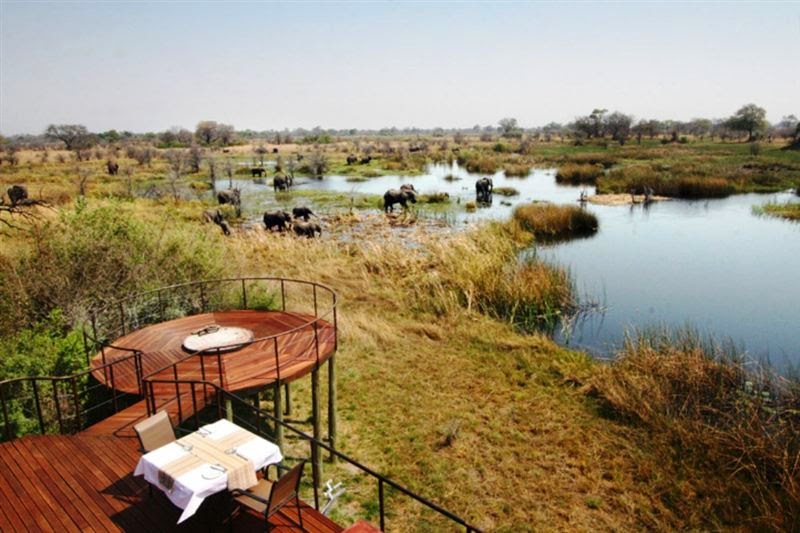
After the world's oldest desert in the south, the Caprivi wetlands come as a bit of surprise. The finger of land that slices between Botswana and Zambia to touch Zimbabwe is a sub-tropical paradise of perennial rivers, sodden marshes and verdant woodlands at odds with the parched country to the west. 
 
No words can describe Namibia...
It has to be experienced!


Friday, June 5, 2015

Plants and Vegetation in Namibia


Due to the climatic differences within the country, Namibia has a broad variety of plant species from desert and semi-desert vegetation to evergreen subtropical plants.


About 70% of Namibia is savannah. In Central Namibia, thornbush-savannah is dominant with extensive grasslands and acacia bush. Sporadically you see trees, mainly camel-thorn trees and other kinds of acacia which often grow near dry riverbeds. 


East of the Skeleton Coast, the Welwitschia is another desert-adapted species that absorbs dew and precipitation from fog over specially developed structures on their leaves. It grows flat on the ground and has only two leaves from its thick trunk. The leaves continue to grow throughout the long life of the plant. It is hard to determine the age of these plants, but it is believed that they live up to 1,500 years or more. 


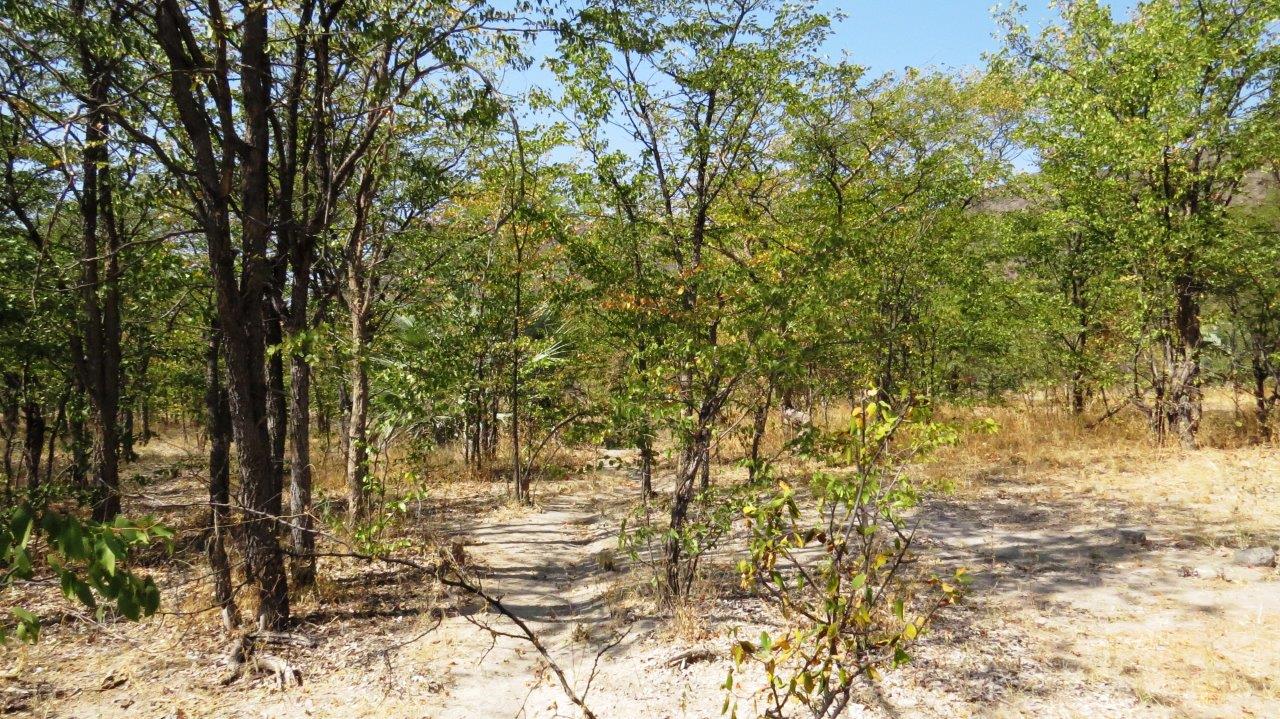
Towards the north-east, where there is a higher rainfall, the thornbush savannah slowly turns into Mopane savannah and there is a greater number of trees. In the relatively humid Caprivi the dominant vegetation form is the woodland savannah, interspersed with single baobabs, wild figs and makalani palms.    


Not much grass grows in the arid south of Namibia. Trees are also scarce. Succulents - water-storing plants - can be seen frequently in this region. Most impressive is the Kokerboom or Quivertree, endemic to Namibia and Namaqualand. It can reach a height of 9 metres and is frequently found in the area around Keetmanshoop and in the Tiras Mountains.

For more information please contact us at 

Monday, March 23, 2015

Caprivi Strip

Namibia is an arid, rough land full of contrasts, but still inviting and easy to travel. As one of the most scarcely populated countries in the world, it’s not the right place to get lost in the crows. But it is a top destination for those who enjoy nature, grandiose landscapes, spectacular sand dunes and first-class wildlife viewing.

http://www.namibiareservations.com/ntwala_island_lodge.html

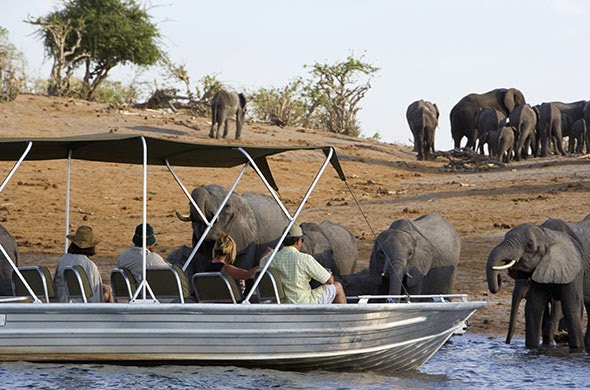
The Caprivi Strip is a narrow strip of land between Botswana on the south, Angola and Zambia to the north, and Namibia’s Okavango Region to the west. The Caprivi is the wettest region in Namibia with its high rainfall and a number of major rivers like the Okavango, Kwando and Zambezi. The abundance of water sustains a large variety of animals, including a large population of elephants. The wildlife is being protected in four reserves. There are no fences however, so the animals can roam freely across the borders of the neighboring countries.

National parks & reserves in the Caprivi Strip

Popa Falls Reserve
Popa Falls lie at a point where the Okavango River breaks up and drops 2.5m over a rocky section, caused by the first of five geological faults.The area by the riverside at Popa Falls is thickly vegetated with tall riverine trees and lush green shrubs, which encourage waterbirds and a variety of small reptiles. Footbridges have been built between some of the islands, and it's worth an hour's stop to spend hopping among the rushing channels, or walking upstream a little where there's a good view of the river before it plunges over the rapids.


Mahango National Park
The eastern boundary of Mahango National Park is the Okavango River, which is also the reserve's focus.On the higher and drier land of the bank, are wide belts of wild date palm-forest, as well as the lush riverine vegetation that you'd expect. Further from the river are dry woodlands and acacia thickets, dotted with a few large baobabs. 


Mamili National Park
This unfenced swampland reserve of about 350km² was created shortly before Namibia's independence and consists largely of marshland, veined by a network of reed-lined channels. It includes two large islands: Nkasa and Lupala. Mamili is located in the southwest corner of the eastern Caprivi Strip, where the Kwando sharply changes direction to become the Linyanti.

http://www.namibiareservations.com/nkasa_lupala_lodge.html

For more information please contact us at:

Monday, October 20, 2014

Interesting Facts About the Caprivi/Zambezi Region

Northern Namibia is generally very lush, watered by a generous annual rainfall. East of Owamboland – which means northeast of Grootfontein – lie the regions of Kavango and Caprivi / Zambezi.


The Khaudum Game Park, is only accessible by four-wheel drive vehicle. It is far better to travel in this park with at least two vehicles, as the sand is very thick and it is a rather remote area. The park is home to herds of elephants, roan, eland, kudu, gemsbok (oryx), blue wildebeest, wild dog and lion. A lush water-fed area, the narrow extension of land known as the Caprivi Strip protrudes eastwards from the extreme north-east of Namibia, adjoining Zimbabwe, Botswana and Zambia.
Northeastern Namibia and into the Caprivi is a mosaic of woodlands, riverine forests, swamps and. rivers. Off-the-beaten track destinations include the Nyae-Nyae area, the ancestral home of the Ju/'hoansi San. Formerly known as Eastern Bushmanland. The area is four-by-four country ONLY.

Some 200 kilometres east of Rundu lies one of the scenic highlights the Caprivi, the Popa Falls. Actually, they are rapids rather than waterfalls. Here, the Okavango breaks through a four metre high rocky intrusion in its riverbed. The falls lie amidst enthrallingly beautiful nature. Here you also find the most scenic campground in the north of Namibia although there are a number of lodges with campsites as well.
Within this area there are also 3 community campsites, 4 upmarket lodges, a craft market and two traditional villages. The Mamili National Park is a watery wonderland of wildlife, islands, river channels and wetlands. The two large Islands are Nkasa & Lupala and are on the Kwando / Linyati rivers. During dry season the Islands can be reached by road, but after the rains 90% of the area becomes flooded, cutting them off from the mainland.

Across from Muduma on the other side of the kwando river is the Horseshoe area, which has two community campsites. They are both excellent and the area is full of game as well. ONLY 4 x 4 can be used.

Muduma National Park (also only 4x4) is approx 100.000 hect of dense savannah and mopane woodlands with the Kwando river as its western boundary and Botswana on the other side. The Kwando river stems from Angola and changes its name as it goes along, ending in the Chobe, which then enters into the Zambezi. {mosimage}The Chobe at Ngoma Border fl flows both ways, the reason being that the Zambezi when in flood pushes the Chobe water back along the banks of Namibia and Botswana.

Two destinations accessible by sedan car are the Mahango Game Park and Popa Falls, a series of rapids, where the Kavango river breaks through a four metre high rocky intrusion in its riverbed. The falls lie amidst enthrallingly beautiful nature. The park offers outstanding birding and is also renowned for its large numbers of elephant, red lechwe, sable, roan, buffalo, blue wildebeest and gemsbok (oryx).

The small town of Katima Mulilo at the eastern end of Caprivi offers some attractive lodges and has an airport, a hospital, some petrol stations, grocery stores and a street market with crafts, traditional baskets woven from grass, wood carvings, jewellery and clothes. The Caprivi Strip's nerve-centre, Katima Mulilo, is closer to Lusaka, Harare or Gaborone than it is to Windhoek, and in many ways this region is more like the countries which surround it than like the rest of Namibia.

The area is highly populated with scattered settlements of subsistence farmers cultivating Mahangu and other crops, tending their cattle, or living off freshwater fish. Unlike much of the rest of Namibia, the Kavango and Caprivi regions feel like most Westerners' image of Africa. You'll see lots of circular huts, small kraals, animals and people carrying water on their heads. By the roadside are stalls selling vegetables, fruit, or woodcarvings, and in the parks you'll find buffalo hiding in the thick vegetation.
Note the different designs of the rondavels and villages as you travel through. Some are identical to those in eastern Zimbabwe, while others resemble the fenced-in kraals in Botswana. Even the local language used in the schools, the Caprivi's lingua franca, is the Lozi language – as spoken by the Lozi people of Zambia.

Monday, October 6, 2014

The Namushasha River Lodge

Namushasha River Lodge celebrates the wonders of the Zambezi water world with accommodation fit for a king. There's a magic, a feeling or a charm that enraptures you in these northern realms. With elephants, hippos, myriad bird species, waterlilies and African bush, a visit to Namushasha provides an enriching adventure into Nature - to the accompaniment of the chiming of reed frogs, bird calls, hippo grunts and the soothing sound of a boat skimming through water.


Namushasha's impressive central entrance with wooden chandelier and carved animals leads guests into the attractive lodge set between the trees, in true African style. The dining room, with its high thatched roof, is open on the sides to the river world, providing a suitable - and airy - welcome to wonderland.


Namushasha River Lodge offers guests a superlative choice of exciting activities: Stroll past the green-lawned campsite visited at night by hefty hippos to the traditional heritage centre (here, you'll be able to learn about the Caprivian way of life from the Caprivians themselves who welcome you to their centre under a giant baobab and sweet-smelling thatch for song, dance and laughter); hop aboard the river boats for early morning or late afternoon river cruises to explore the channels and discover the diverse bird life; or take a trip to the Bwabwata National Park.


For more information please contact us via email at info@namibiareservations.com

Monday, February 10, 2014

Kongola Surroundings - Namibia


About Kongola: Kongola is a village in the Caprivi Strip, Namibia. It is located on National Route B8 (Otavi - Katima Mulilo). Kongola a gas station and a grossiste.Ce pvillage has not yet been connected to the mains or access to drinking water.
                                                 
                    
Mudumu National Park
                        
Malimi National Park
Bwabwata National Park
Nushasha Country Lodge
BumHill


Tuesday, May 7, 2013

Hunting Safaris VS Photographic Safaris

Hunting safaris and photographic safaris are two totally separate operations and cannot be mixed. Someone on a photographic safari does not want to bump into a hunter who is bent on killing an elephant caught by the photographer’s lens. Hearing gun shots in the distance is not a comforting feeling for someone hiking through the bush. Also, animals need to know when they are safe. In Zambia we have game management areas (for hunting) next to national parks. The animals know that they are generally safe in the national park. You can watch them cross a road just to move from game management areas into the park when they see a vehicle approaching!

There was a report in the media that the Namibia Minister of Environment wants to award hunting concessions in national parks. The parks are Bwabwata National Park, Waterberg Plateau, Daan Viljoen, Von Bach Resort, and Namib-Nauklauft Park. Hunting concessions are also being given in the Kavango region.

Bwabwata National Park is a multi-use park where people live as well as the animals. It is a large park, and hunting concessions can be in places where photographic safaris do not take place. Hunting has been going on there for some years already. Waterberg Plateau is just over 400 km² (about the same size as Kasanka in Zambia). It is a smallish park with stunning scenery where black and white rhino were introduced along with other animals for their protection. It is to the east of Otjiwarongo.

Daan Viljoen Game Reserve is about 25 km north of Windhoek and is popular for hiking. Again it is a smallish park of around 400 km². The camp has recently been renovated and welcomes visitors in chalets and camping. Von Bach Recreation Resort is a mere 43 km² and attracts visitors for water sports and angling. Namib-Naukluft Park is an enormous park – mostly desert. It is just under 50,000 km² and home to black rhino, gemsbok, Hartmann’s zebra, giraffe, springbok, brown hyena, and leopard. This is where the diamonds and uranium are.


Mangetti National Park was a bit of a research nightmare, because it wasn’t listed on many tourist websites. It is about 400 km² and was proclaimed a park in 2008. It used to be a breeding camp for endangered animals like rhino. From reports on the web, it seems that it is not open to the public as yet. According to the report on hunting concessions in The Namibian: The species to be hunted include elephant, leopard, roan, spotted hyaena, blue wildebeest, duiker, steenbok, buffalo, hippopotamus, crocodile, sable, lechwe, eland, giraffe, Hartman zebra, kudu, impala, eland, warthog, oryx, and klipspringer.

According to the ministry, trophy hunting removes mostly old, post-reproductive animals or single males, which are usually in excess in natural populations. Controlled hunting is thus viewed as sustainable use of wildlife populations.

Friday, April 12, 2013

The Tigerfish!!

The tigerfish is a fierce and wily creature that demands respect from all forms of life that may happen across its path and is regarded by majority as being the best freshwater game fish in Africa. In this page you will find: the description, distribution & Habitat, general behavior, breeding patterns, lifecycles and a look at the feeding habits of the tigerfish of the upper Zambezi.

Description
The tigerfish is best described by its Latin scientific name Hydrocynus vittatus which when translated means “Striped Water dog” - a most fitting description indeed.
The tigerfish has a blue-silver fusiform shaped body with red & yellow pointed fins which have black trailing edges. The head is large with extremely bony cheeks and jaws. The 8 teeth per jaw are conical & extremely sharp and are used more for grasping prey than tearing bits of flesh from it. These teeth are replaced at intervals throughout the tigerfish’s life. Males and females are similar in form and coloring but males are generally smaller reaching +_ 500mm at maturity while the females are much larger reaching over 700mm at maturity. Tigerfish Found in the fast flowing waters of the Upper Zambezi can reach 10kg in weight.

Distribution and habitat
The tigerfish is found mostly in the warmer, well oxygenated fresh waters of Southern Africa and are most abundant in the Zambezi, Okavango and Pongola river systems.  Tigerfish are also found in the Congo River, Lake Tanganyika and some other North and West Africa river systems.

General Behavior
The tigerfish is an aggressive predator that relies on other fish as its staple diet for most of its life. Only when the tigerfish is really young does it feed on small insects, crustaceans and plankton. The tigerfish moves and hunts in like size shoals and only the larger specimens are found living on their own. The reason “like size” fish shoal together is because a tiger will not hesitate to make a meal of a smaller version of the species if the opportunity was to present itself.

Breeding and Lifecycle
Although very little is known about the breeding patterns of the tigerfish of the upper Zambezi, it is thought to occur over the flood period when waters are the highest from March, April and May. Spawning occurs on the flooded banks of the main channel and backwaters. Fecundity is high within this species so it’s a good thing a large female can lay as much 780 000 ova. Males reach sexual maturity between the ages of 2-3 years while a breeding female will exceed 400mm.  In the first year of development a young tiger can grow as much as 160mm – 200mm, and up to 300mm in its second.

Feeding habits and patterns  
As I have been trying to drum into anybody who reads this website is the fact that the Upper Zambezi stretch between Vic falls and Katima Mulilo is a constantly changing environment. For half the year we have rising waters and for the other half we have receding, this means the tigerfish have to be constantly changing their feeding patterns to stay in line with water levels, water clarity, and the different variety of food that becomes available to them as the seasons change.

Tuesday, March 12, 2013

Selfdrive Tours Namibia

Namibia Reservations offers its potential clients a variety of selfdrive tours throughout Namibia. It ranges from affordable to luxurious Namibia Safaris. Should you however have a personal request please do not hesitate to contact us to notify us of your interests.
  
We will tailor make your itinerary to suite your ideas.
  
Below you will find a range of set tours offered by Namibia Reservations. 

(Please click on the Tour Code for more information regarding the Tour.)

NR01 Namibian Highlights 14 Days/13 Nights
  
(Dead Vlei, Dune 45 - Big Daddy & Sossusvlei Pan in Sossusvlei)

NR03 Extravagant Vistas 15 Days/14 Nights
  
(Shipwrecks at Skeleton Coast, Fur Seal Colony at Cape Cross & Quadbike Adventures at Swakopmund)

NR08 Discover Caprivi 12 Days/11 Nights
 
(Nunda River Lodge - Divundu & Caprivi Strip)
    

Contact us for your Namibia dream to realize!
info@namibiareservations.com

Tuesday, February 5, 2013

Celebrating Valentine's Day


Seeking a romantic getaway this Valentines Day for you and your loved one?  We cater for all your needs.

Contact us and we will arrange your romantic stay at any lodge or hotel of your liking.

We could suggest lodges and hotels, with the details you supply us with, that suit you and your partners needs.

So give us a call at +264 67 304716 or send an email to info@namibiareservations.com and we will come into contact with you soon.


Monday, January 9, 2012

Lianshulu Lodge open again

Lianshulu Lodge under new Ownership
Lianshulu Lodge is open again under new ownership and management.

The ownership consists of Dutch nationals Alexander Van
Heeren and Peter Van Langeveldt as well as Dusty Rodgers who is well known in the Namibian Tourism & Hospitality Industry and Reinhardt Küsters, a local shipping entrepreneur.

Lianshulu Lodges which includes Lianshulu Main Lodge and Lianshulu Bush Lodge on an 800 ha private concession in the Mudumu National Park along the Kwando River as well as Matota Island Lodge, situated on the Mudumu National Park cut line inside the Bayelerwa Conservancy in the Eastern Caprivi Strip of Namibia, will be incorporated into a fully fledged marketing & management company known as The Caprivi Collection with central reservations and marketing based in Swakopmund under the management of Anette Küsters who too is no stranger to the travel and airline industry in Namibia.

The company has already embarked on extensive renovations and refurbishments of the properties and
Lianshulu
Main Lodge is now open for bookings with the remaining two properties opening on a gradual phase-in as business demands this.

This development will see the company having traversing rights through over 300 000ha, equal to the size of Belgium, of one of the most pristine and unspoiled natural wildlife areas which now form part of the
Kavango Zambezi Transfrontier
Conservation Area (KAZA) spanning Namibia, Botswana, Zambia, Zimbabwe and Angola.

Further to local activities, the company will soon offer access to safari circuits in Botswana via its own border post at
Lianshulu
Lodge.

A range of exclusive activities which includes river trips, transfers, bush picnics and overnight fly camps will be on offer with our affiliated properties within the area.

Friday, December 2, 2011

Ministry of Agriculture, Water & Forestry: Foot & Mouth Desease Update in Caprivi

We received news that foot and mouth has become a problem again for the December season in the Caprivi area. Please see the information received from the Ministry of Agriculture, Water & Forestry:
 
MOVEMENT OF ANIMALS/PRODUCTS AND INFECTIOUS THINGS THROUGH VETERINARY ROAD BLOCKS, CAPRIVI.

1.    The following animals/infectious things may not under any circumstances be allowed to pass through the road blocks from any infected area:
·         All cloven hoofed animals (cattle, sheep, goats, pigs, and game.)
·         Raw red meat
·         Raw milk
·         Grass, hay, straw, reeds, Lucerne
·         Manure
·         Hides and skins and second hand jute bags
·         Bone, bone meal , carcass meal and blood meal
·         Large quantities of firewood i.e., vehicle load
·         Sour milk
·         Other products that might pose a risk – contact State Veterinarian.

2.    The following may cross the road block from an infected area:
·         Dogs and cats
·         Horses, donkeys and mules
·         Live or frozen poultry and birds, feathers, eggs and raw meat of poultry and birds
·         Fish, reptiles, frogs, worms
·         Vegetables, fruit, wild, free from manure or blood
·         Leafy vegetables such as cabbages, spinach, lettuce, celery, etc., if free from manure or blood.
·         Butter, margarine, cheese in original container/package
·         Sealed containers of pasteurized milk
·         Cooked meat/canned products/polony, Vienna’s in original/vacume packed container
·         Mealie – meal
·         Quarry stones for construction
·         Trophies (with taxidermy documents) wrapped in transparent material

 3   The following may cross the road block after spraying
     with 5% washing soda
·         Wood carvings, curios, mats, future manufactured from reads/grass
·         Small quantities of firewood less than 20kg
·         Horns

Dr. F. Joubert
Deputy Chief Veterinary Officer
Windhoek

Please do not hesitate to contact us for more details: info@namibiareservations.com