Showing posts with label Wildlife in Namibia. Show all posts

Monday, December 4, 2017

Happy International Cheetah Day!

Did you know that today, 4 December, is International Cheetah Day? Namibia's own Cheetah Conservation Fund hopes the day will "increase worldwide awareness about Africa and Iran’s most endangered cat.” Namibia's commitment to conservation has provided a healthy environment for studying about the cheetah population and how to strengthen its numbers. To help you mark International Cheetah Day, here are some FAST facts about the world's FASTEST land animal!

  • The cheetah is the fastest land animal in the world. They can achieve speeds of 112 to 120 km/h (70 to 75 mph) in short bursts. 
  • Most car dealers would be envious of their acceleration skills - the cheetah can go from 0 to over 100 km/h (62 mph) in just three seconds! 
  • So how does the cheetah have to power to sprint so fast? Partly because of its ability to increase circulation of oxygen as a result of its unusually large heart, wide nostrils and increased lung capacity. 
  • A cheetah's breath will increase from 60 breaths per minute to 150 when moving at top speed! 
  • Other adaptations include a flexible spine and thin, muscular body with long legs - a bit like an olympic athlete! 
  • Despite moving at incredible speeds, the cheetah is able to make swift, sharp turns to keep up with its prey - thanks to its tail which it uses as a rudder. 
  • The cheetah's characteristic black "tear marks" that run from the inside of its eyes down to its nose help keep the sun's glare out of its eyes - aiding the big cat while it hunts.  


Tuesday, January 26, 2016

Western Black rhino declared EXTINCT

Africa's western black rhino is now officially extinct according the latest review of animals and plants by the world's largest conservation network.


The subspecies of the black rhino -- which is classified as "critically endangered" by the International Union for Conservation of Nature's (IUCN) Red List of Threatened Species -- was last seen in western Africa in 2006.

The IUCN warns that other rhinos could follow saying Africa's northern white rhino is "teetering on the brink of extinction" while Asia's Javan rhino is "making its last stand" due to continued poaching and lack of conservation.

"In the case of the western black rhino and the northern white rhino the situation could have had very different results if the suggested conservation measures had been implemented," Simon Stuart, chair of the IUCN species survival commission said in a statement. 


"These measures must be strengthened now, specifically managing habitats in order to improve performance, preventing other rhinos from fading into extinction," Stuart added.

The IUCN points to conservation efforts which have paid off for the southern white rhino subspecies which have seen populations rise from less than 100 at the end of the 19th century to an estimated wild population of 20,000 today.

Another success can be seen with the Przewalski's Horse which was listed as "extinct in the wild" in 1996 but now, thanks to a captive breeding program, has an estimated population of 300. 


The latest update to the IUCN Red List of Threatened Species reviews more than 60,000 species, concluding that 25% of mammals on the list are at risk of extinction.

"We have the knowledge that conservation works if executed in a timely manner, yet, without strong political will in combination with targeted efforts and resources, the wonders of nature and the services it provides can be lost forever." 


Monday, October 26, 2015

A Natural Place to Stay


There is a special wilderness area, encircled by the Erongo Mountains,where the desert, mountain, and bushveld ecosystems combine. Here, in a secluded valley, you will find the Erongo Wilderness Lodge in a dramatic setting of granite boulders and breathtaking views.


Raised wooden walkways and natural stone steps connect the chalets to the main area of the Erongo Wilderness Lodge, where the restaurant, lounge, swimming pool and sundowner deck invite you to relax and fully unwind.


 The open-plan lounge and restaurant overlooks a floodlit waterhole, and is warmed by a central fireplace in the winter.


Nature provides the compelling reasons for visiting this unique environment at the Erongo Wilderness Lodge. Many rare, endemic, and special species of animal, bird, and plant life thrive here, making this one of Namibia’s most diverse and wildlife-rich areas. This wealth of natural and cultural history can be enjoyed by joining a guided nature drive, visiting one of the Bushman rock art sites, or walking among the mountains with one of our knowledgeable guides. Or make the experience a more personal one by simply exploring on your own, or just soaking up the atmosphere from the private deck of your tent.

For more information please contact us at 
info@namibiareservations.com
www.namibiareservations.com

Friday, August 7, 2015

Erindi Private Game Reserve


Erindi Private Game Reserve offers the widest selection of exciting species (in the greatest numbers), the most dynamic and informed guides, the finest cuisine, the best facilities, and the friendliest welcome you could imagine.


Old Traders Lodge is the perfect base for your forays into the exhilarating bush, our spacious suites have all the charm, comfort and conveniences you’d expect of a top-flight resort. Spot various game species while walking through the Camp, on the deck, or from your suite patio.


The ultimate bush luxury in an environment geared up for relaxed game viewing. Erindi Private Game Reserve comprises of 70 719 ha of pristine wilderness, and presents an amazing array of diverse landscapes – from golden savannah to dense bush with mountains, natural waterholes, grasslands and pans.

Activities


Summer Night Drive
San Village Trip
Guided Game drives on Open 4x4s
Cheetah Walk


For more information please contact us at 

Monday, July 13, 2015

Ultimate Holiday Destination

http://www.namibiareservations.com/otjiwa_lodge.html

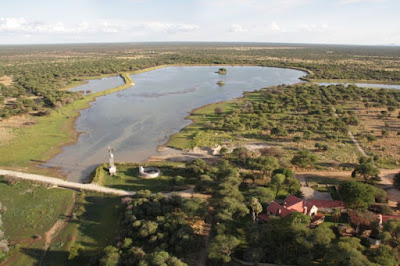
Otjiwa's vast 12,000 hectare expanse of bush-veld conceals a treasure trove of African wildlife boasting some 25 free-roaming game species including one of the country's largest herds of Sable Antelope and a number of precious White Rhinoceros, both of which offer Guests excellent chances of outstanding sightings. 

http://www.namibiareservations.com/otjiwa_lodge.html

All so known for its beautiful dams (artificial lakes) which are home to a rich variety of bird life, chief amongst which must be the majestic African Fish Eagle whose chilling shriek is often heard long before the bird is seen.

Activities


Game drive to the vulture hotel and education facility.
Rhino tracking on foot can be enjoyed
Hiking as well as mountain biking trails are available
Fishing on a catch-and-release basis is available
Bird-watching 


Otjiwa Lodge is the ultimate holiday destination for travelers in search of an authentic African experience that meets the very best in international tourism standards, together with true Namibian hospitality.
 
For more information please contact us at 

Friday, May 29, 2015

Mount Etjo Safari Lodge

Encounter Wildlife, Dinosaurs, Namibian History

http://www.namibiareservations.com/mountetjoe.html

Mount Etjo Safari Lodge is located in the heart of the Okonjati Game Reserve, one of the first private Game Reserves established in Namibia and founded by world-renowned conservationist Jan Oelofse. Home to the famous fossilized dinosaur footprints, thousands of different animal and bird species and site where the Namibian Independence Declaration was signed, this historic lodge deservedly carries the name “Etjo”, meaning place of refuge.

Accommodation


Villa

Partially located on an island, with an extraordinary 180 degree view of the lake where animals come to quench their thirst, the Villa is the pearl of Mount Etjo Safari Lodge. The Villa offers privacy, exclusivity and luxury, with a private swimming pool and garden, a Jacuzzi, a mini-bar, DSTV, a large lounge with a fire-place, two king-size beds, private dining facilities and a personal chef (at request, subject to availability). An exceptional opportunity for all-day game viewing from the comfort of the grandest accommodation, the Villa is an African dream come true.

Suites

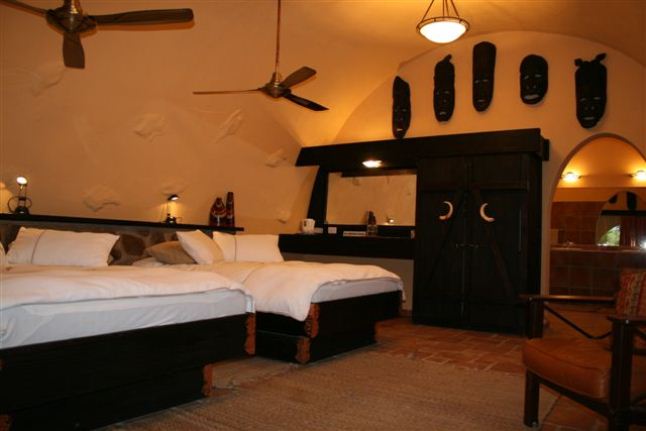
The Luxurious Suites offer the perfect accommodation for a honeymoon or for a special getaway. Rooms are spacious and fitted with a large lounge, an exquisite bedroom and a fire-place or Jacuzzi, a mini-fridge, safe, ceiling fan, air-conditioner and a tea/coffee station.

Luxury Room

All luxury rooms are equipped with a tea/coffee station, an air-conditioner and heater, a ceiling fan, a safe and a small fridge. Some rooms offer the use of a Jacuzzi.

Dining


Dinner is served in their beautiful traditional African lapa around camp fire, with a glimpse of the night sky.

Activities

http://www.namibiareservations.com/mountetjoe.html

Game Drive
Cheetah feed
Lion Feed
Bird viewing
private drive

For more information please contact us at 

Monday, April 20, 2015

Sâsa Safari Camp


'Sâsa' means 'peaceful' and is a Damara name. Offers panoramic views of the nearby Pareisis mountains.
 

 Situated in the Ugab Valley of the Kunene region and only one hour drive to the famous Etosha National Park, the wild life gem of Southern Africa and within easy day trip outings to all the famous tourist attractions and historic landmarks such as Vingerklip, Petrified Forest and the Waterberg Plateau..


Camp is built with natural rock stone from the area, blending
in harmony with its backdrop of splendid rock formations. Accommodation includes 10 twin bed chalets with a large communal kitchen. Each chalet has its own bathroom en suite and is comfortable, furnished and spacious.

http://www.namibiareservations.com/sasa_safari_camp.html

Large sparkling swimming pool  just  to relax in the peaceful surroundings.


Sâsa Safari Camp offers a hiking trail of +- 3.5 km, a volley ball
court. Relax in the peaceful surroundings of nature. Various wild
animals, birds and reptiles can be spotted from time to time.

For more information please contact us at 
info@namibiareservations.com
www.namibiareservations.com

Wednesday, March 4, 2015

Growing grapes for the greater good

Neuras Harvest Festival


16 203.8kg of tantalizing grapes were painstakingly hand-picked from 16 January to 16 February this year, and yes, all of that in just a month!

After the 10 month fermentation and maturing process that lies ahead – and what a wait that will be - an even more tantalizing 3 340 liters of Shiraz, 710 liters of Grenache, 935 liters of Mourvedre, 200 liters of Merlot and Petit Verdot, 800 liters of port, 500 liters of Rosé and two 50 liter vats of brandy will be produced… something to tempt every palette. An approximate 9 712 bottles will be filled with the true taste of Neuras and Namibia.
Neuras, N/a’an ku sê Wine and Wildlife Estate – an oasis of wine and wildlife creating a conservation legacy.

February was certainly carnivore month at N/a’an ku sê, with magnificent cats having been collared and released.
Leopard 084


February’s first carnivore collaring saw splendid leopard 084 joining the ranks of our monitored felines. Approximately 300km north of N/a’an ku sê a farmer had caught a gorgeous female leopard in a trap cage, and our team quickly flew to the site - proving that “rapid response” is another tool in N/a’an ku sê’s repertoire of rescuing tactics. 
 
Not to be outdone…
the cheetahs join the ranks
 

Kanaan, a breathtaking 33 000 hectares of spectacular locations… and wild free-roaming carnivores. Our intrepid Kanaan based researcher soon discovered a marking tree with obvious signs that wild cheetahs had chosen the spot for their social antics. And sure enough… a camera trap caught images of the spotted predators.

A trap cage was quickly set up, and soon a gorgeous male cheetah, whose natural urge to visit his territorial marking tree got the better of him, entered the cage.

For more information please contact at  

Wednesday, February 18, 2015

Damaraland Paradise

Paradise on the Uniab River in northwest Damaraland.Waving palms whispering in the wind, spectacular surroundings which harbour the famous desert elephant, the rare black rhino, giraffe, zebra, gemsbok and many other wild animal species, sunsets to dream of. This is Palmwag Lodge, one of Namibia's oldest and most popular tourist rendezvous.


Beautiful landscape,breath taking view.

Activities:
1.Sightseeing
Damaraland wildlife excursion-Enjoy a tour in open 4 x 4 game-viewing vehicles. Spectacular close-up viewing of Namibia’s only free-ranging game e.g. zebra, kudu, oryx, springbuck and with a bit of luck the endangered black rhino and desert elephant. 


2.Rhino Tracking
Rhino tracking excursions are guided by a qualified guide from Palmwag Lodge and a qualified tracker from the Rhino Rangers / Save the Rhino Trust


Directions
Palmwag Lodge is situated just a few kilometres north of the junction of the C43 and the C39. Heading north, it is on the left, immediately after the veterinary fence, and its concession stretches off to the west, as far as the Skeleton Coast. 

For more information please contact us at: 

Friday, September 19, 2014

Desert-adapted lions in Namibia

Desert-adapted lions in Namibia occur mostly outside protected areas in the Kunene Region. The unique landscapes of the northern Namib Desert, abundant wildlife, and high levels endemism, makes the Kunene Region an important area for tourism. The lion is an important flagship species for the growing tourism industry. Although the desert-adapted lions are valuable to tourism, the local communities have to share their land with these free-ranging large carnivores.


 Lions often prey on domestic livestock and farmers respond by shooting or poisoning lions, to protect their livelihood. The local communities have to bear the costs of living with lions, but they do not always share in the benefits from tourism. There is a need for sustainable-use of lions through eco-tourism, with tangible benefits to the communities, and for proactive management of human-lion conflicts. The conservation of lions in the Kunene Region is therefore essential to address Human Lion Conflict, and to conserve a flagship species for the tourism industry. 


The Kunene Lion Project contributes to this process by studying the density, demography, and population ecology of lions. Through applied research and monitoring, the study collects sound scientific data to guide management strategies and the implementation of a National Lion Conservation Strategy.

Thursday, February 7, 2013

RHINO POACHING

The final figure for the total number of rhinos poached in S A during 2012 is 668. The previous year’s figure was 452. A simple arithmetic calculation provides a stunning statistic: there was a year-on-year increase of 47.8%!!!!!

If this trend continues we can expect the number of rhinos to be poached in 2013 to be around the 987 mark !
The head of Sanparks has issued a statement that the number of rhinos poached in Kruger in 2012 is still less than the number of young born. What about the number of rhinos that died naturally ?

Are we going to wait until there is negative growth before we make this priority number ONE in conservation circles? I believe that more rangers are being employed and that sniffer dogs will be used at entrance gates. This is great news but we need to guard against fostering the impression that we have a complacent attitude. I often wonder for how much longer our guides will be able to show Rhinos to our tourists.

Friday, December 31, 2010

Namibia Tracks & Trails Tours now offered on Namibia Reservations

4 Tours of Namibia Tracks & Trails have been included to the Namibia Reservations website.


For more than 20 years Namibia Tracks & Trails has been organizing lodge- and camping safaris in Namibia offering all the excitement of a true African experience backed by the local expertise to make it a truly memorable trip.
We keep social responsibility in mind when planning and guiding trips. We support sustainable tourism and design safaris that have a positive impact on both the client and the indigenous people we meet.
All our guides are dedicated conservationists with an intimate knowledge of the fauna, flora and cultures of the region. They love their country, have been raised in it and know what is has to offer. They speak three languages and are able to communicate with the ethnic groups of Namibia. All our safaris are offered on a non participating basis with the entire camping equipment supplied by us.
More details on the tours offered visit:

Thursday, September 23, 2010

International Day of the Rhino


22 September was officially the International day of the Rhino.
At a recent award ceremony for Namibian Ministry of Environment and Tourism field staff the Minister laid down the law to poachers. With recent reports that world-wide poaching of rhino (in Africa and Asia) is at a 15-year high, the Namibian government is being even more vigilant with measures to prevent poaching even though this is currently not a major threat to Namibia as the last reported case of poaching an endangered black rhino took place over a decade ago. In fact Namibia has some of the heaviest penalties in Africa for poaching of protected species and this has been an effective deterrent.
Namibia was the first African country to incorporate protection of the environment into its constitution, as well as being the only country in Africa that trans-locate black rhinos out of National Parks and move them to communal conservancy areas. Namibia also has the largest population of black rhino which is managed through a custodianship programme with land owners and farmers.

Namibia is leading the way in many areas of wildlife conservation in Africa and your safaris to Namibia directly contribute towards these conservation efforts.


Please visit our website for tours offered: www.namibiareservations.com/ultimatesafaris.html