Showing posts with label Namibia News. Show all posts

Wednesday, March 2, 2016

News from Naankuse!!


As gentle as the grey giants of Namibia seem to be, conflict between elephant and farmer is a gloomy reality that Namibia’s Ministry of Environment and Tourism (MET) is facing head on with the collaboration of the N/a’an ku sĂȘ Foundation.
Namibia Breweries Limited, who share our passion for conservation, eagerly sponsored three GPS collars for our gentle giants, with three further collars provided by MET making it possible to collar six tusked titans.


The morning of 20 February saw a helicopter take to the skies over the Kunene region of north western Namibia. This region is not only home to a significant number of free-roaming elephants – but also provides a livelihood for many commercial farmers. A livelihood that some feel may be threatened by an elephant’s monolithic movements.
Spotting the grey giants was not an easy task, with the vast Kunene region stretching seemingly endlessly into the distance. But undaunted the team continued its efforts, with Rudie van Vuuren adding to the eyes in the sky with his Cessna.  And ultimately elephants were spotted, allowing the collaring to begin.  

With female elephants being darted from the air, Marlice van Vuuren was forced to engage in some challenging off-road driving, needing to follow the helicopter into impossibly remote areas as fast as possible in order to assist MET staff with the collaring efforts on the ground. Two days of extreme temperatures, endless searching and constant vigilance resulted in four elephants being collared, providing us with valuable insight into their movement patterns and behavior. This intimate knowledge gives us the tools with which to advise farmers on how best to live side by side with their mammoth neighbors, and ultimately we hope to abet a peaceful and tolerant relationship between landowners and the giants of Namibia.


Wednesday, February 17, 2016

Ongwediva


Floods in Omusati Region have displaced about 250 people who relocated to higher ground. One person also died and many were left destitute.

About 86 homesteads were extensively damaged, while several schools and churches were deluged by the heavy rains and mahangu fields submerged, leaving the affected villagers without food and shelter.

A young girl lost her life after attempting to cross a turbulent stream while herding a flock of goats.


Most of the relocated people are mothers with babies, schoolchildren and people with disabilities in Onesi and Ruacana constituencies of the Omusati Region.

The floods were caused by a combination of rains in the region as well as the Cunene River bursting its banks following heavy rains in neighbouring Angola.

Governor of Omusati Region Erginus Endjala said the region was hard at work to provide for the affected communities and assist them to return to their homes as soon as the waters subside.
“The figure of 250 is only those who are severely affected and have been relocated, but several other people have also been affected,” said Endjala.


Fifty families in Okatjaningwa and Eenawa villages have been relocated to the ELCIN centre near the Etunda irrigation project.

Besides the relocation, Endjala said, authorities have also ensured that food and ablution facilities were provided for those affected.

Endjala said the relocated residents were provided with tents.
The region is also strategizing on how the water can be diverted to its usual natural channels to ease the burden of those affected.

“Engineers are already on site and a preliminary report was completed on Monday to see how the water can be channelled to Olushandja dam,” said Endjala.

Endjala appealed to the affected communities to remain calm, assuring that the authorities would do their best to assist affected residents.


Thursday, February 4, 2016

Hilton Garden Inn to open in Windhoek


The United Africa Group (UAG) will soon start construction of the Hilton Garden Inn hotel in the heart of Windhoek. This will be the third Garden Inn hotel in Africa.


The hotel will cost around R325 million (€18 million) and will be solely owned by UAG. Construction is planned to start soon and is expected to be completed by early 2018.


"This hotel will be the biggest in the city with a huge conference and convention centre, restaurant and a parking lot for up to 350, and will have at least 180 rooms," said Haddis Tilahun, UAG Founder and Executive Director.


Wednesday, February 11, 2015

Unrivalled access to the red dunes of Sossusvlei


Family-friendly Kulala Desert Lodge is located within the arid Namib Desert on the 37 000-hectare private Kulala Wilderness Reserve. Comprising 23 thatched and canvas "kulalas" with en-suite bathrooms and verandas, each unit is built on a wooden platform to catch the cooling breezes and has a deck on the flat rooftop for sleep-outs under the stars. There are also three tents which can accommodate a family of four each.
The convivial main area includes a lounge, bar, dining area, plunge pool, and wrap-around veranda overlooking the riverbed – a perfect location to view and photograph the desert vista and to contemplate the day’s exciting activities.

Things to do at Kulala Desert Lodge 

Visit Sesriem Canyon

The result of millions of years where water carved its way into the earth.Views from the top are breathtaking, while walks through the canyon reveal distinct geographical layers which were laid down over aeons. 

Star bed

Sleep out under the starry starry skies of the Namib and be lulled to sleep by the sounds of Africa on the roof or your unit.


Horse riding safari*

Ride through some of the most spectacular and unusual scenery on the planet on well-schooled horses.
                         
 
If you wish to make a booking, please contact us at: 

Wednesday, June 18, 2014

Fun facts about the Tintenpalast


The Tintenpalast (German for "Ink Palace") is the seat of both chambers of the Namibian legislature, the National Council and the National Assembly. It is located in the Namibian capital of Windhoek.


 The Tintenpalast, which is located just north of Robert Mugabe Avenue, was designed by German architect Gottlieb Redecker and built by the company Sander & Kock between 1912 and 1913 out of regional materials as an administration building for the German government, which colonized Namibia at the time.


The building was constructed entirely from local materials by Gottlieb Redecker and originally served as the administrative headquarters for the German colonial government.


As an allusion to the large ink usage by the workers in the building, it was named "Tintenpalast" or "Ink Palace". The building is surrounded by the Parliament Gardens which is very popular among the inhabitants of Windhoek.

Monday, March 31, 2014

Monuments and Historical Buildings in Windhoek, Namibia

Most monuments in Windhoek, the Namibian capital, are located within walking distance from each other. Please allow a couple of hours for the walking tour. Monuments in Windhoek, opened during colonial times, commemorate mostly events from German or South African side.
Christuskriche

Windhoek railway station (Mandume Ndemufayo Av.)
The southern wing and central building was built in 1912. In 1929 the northern wing was added.

The Locomotive (the Illing) (in front of railway station)
A narrow-gauge locomotive (gauge 600 mm) has been mounted on stand in front of the station after running between Swakopmund and Otavi from 1904 to 1939. The engine was built in Germany in 1903 and assembled in Swakopmund.  
 
Owambo Campaign Memorial (near railway station)
 This memorial near the railway station was erected by members of the South African Army in memory of their comrades killed on the 6th of February, 1917 near Ehole (Oihole) in a battle against uprising of King Mandume Ndemufayo of Kwanjama. He was killed in action and his head was cut off.

 Kudu Monument (Independence Av.)
Erected in early 60's. Commissioned and donated by Mr. Behnsen, businessman and owner of firm Metje and Ziegler, Ltd. Commemorates a period when a disease struck kudu population and nearly wiped them out.


Zoo Garden (Independence Av., opposite of Gathemann restaurant)
Established in the beginning of the century. Changes were made in 1962 and the Garden was extended. The northwest corner of the garden with its open-air theater and pergola is of special interest, further the children's playground.

Altes Bezirksgericht (Goethe str.)
High Court building. Built in 1908. Remained in use till late 60's when the new High Court building was opened near Kudu Monument. Presently serves as a headquarters of Veterinary Division of the Ministry of Agriculture.

Alte Feste (Old Fort) (Robert Mugabe Av.)
The oldest building in Windhoek (1890). The foundation stone of the fort was laid by Curt von Francois on 18 October 1890. The building was expanded and had some 54 rooms in 1912. Alte Feste served as a headquarters of Schutztruppe and from 1915 as a headquarters of South African troops. From 1935 was used as a hostel for Windhoek High School and from 1962 it is a museum.

War Memorial (Zoo Garden, Independence Av.)
The memorial bearing a golden eagle, which stands in the middle of the lawns, was erected by order of Governor Leutwein in 1897 in memory of those killed before 1897.

Springbuck Fountain (Zoo Garden)
At the corner of Peter Muller Street and Independence Avenue, adjoining the southern end of the Zoo Garden. The Fountain was a donation of the Chamber of Commerce.

Curt von Francois Statue (Independence Av., in front of Municipality)
This monument was erected in memory of Major Curt von Francois. Unveiled on the 18th of October 1965. The statue is almost 18 ft. tall.

Christuskirche (Robert Mugabe Av.)
The idea to build a church for the German Evangelical Lutheran congregation was voiced in 1900 but these plans had to be shelved during Nama and Herero uprisings. Construction was started in 1907.

Artillery and Kammer Gebaude (Hugel str.)
These buildings are probably two of the earliest in Windhoek, apart from Alte Feste.
Built in mid 1890 for artillery division of Schutztruppe as an ammunition strore and weapon repair shop.

Schmerenbeck-Haus (Independence Av.)
Opposite the Municipality. Built in 1893, after 1900 it was enlarged and a gabled roof was added.

Reiterdenkmal (Equestrian statue) (opposite of Christus Kirche)
Erected at the suggestion of the commanding officer of the Schutztruppe, Col. Ludwig von Estorff. The memorial commemorated German soldiers and civilians killed in Nama and Herero uprisings (1903-1907 and 1908). It was unveiled on 27 January 1912, the birthday of Kaiser Wilhelm.

Elizabeth-Haus (Storch str.)
Architect Gottlieb Redecker. Built in 1907 as a maternity home and named after Duchess Elizabeth zu Mecklenburg, wife of the President of German Colonial Company. Until the closure of the building as a maternity home in 1981, some 12 669 babies were born there.

Erkrath-Gathemann-Kronprinz Facades (Independence Av.)
The oldest building is former Hotel Kronprinz (1901-02). Gathemann building was erected in 1913 and expanded in 1926/7 and Erkrath building (1910) is the last to the right. Architect Wilhelm Sander.

Felsenkeller Brauerei (Tal str.)
At the beginning of  the century there were four breweries in the country: Kronen Brewery in Swakopmund, Omaruru Brewery, Klein Windhoek Brewery and Felsenkeller Brewery in Tal valley in Windhoek. The demand for local beer was increasing rapidly and the brewery was expanded in 1912. After World War 1 a number of German citizens were deported back to Germany and smaller breweries had to close down. Omaruru and Klein Windhoek breweries were purchased by Herman Olthaver and Carl List. Hnasa Brewery joined the Consortium in 1968 when the South West Breweries were formed, renamed to Namibia Breweries after Independence.

"Old Location" or "Gammans" cemetery
Located next to Hochland road and the oldest know cemetery in Windhoek. The first identifiable grave is of Zacharias Kukuri who was buried on 18 April 1905. Ehrenfield Nganjako was the last person buried there on 4 November 1926.

Gibeon Meteorites (Post Street Mall)
Discovered by James Alexander in 1838.

Oudstryder an Bittereinder Memorial (Bismark str.)
The memorial was erected to commemorate "Bittereinders" of the Second Anglo-Boer War (1899-1902). A number of Boers where forced to flee South Africa and they settled in South West Africa (Namibia).

State House (Robert Mugabe Av.)
Previously served as the residence of the Governor. At present it is the residence of the President of Namibia.

Old cemetery and war memorial (Robert Mugabe Av.)
Located on the both sides of Robert Mugabe Av. The graveyard was closed in 1927. A "Cross of Sacrifice" was unveiled on 11 November 1981 as a memorial for the victims of WW 2.

"Tintenpalast" and Gardens (Robert Mugabe Av.)
The former German administrative building, "Tintenpalast" ("palace of ink") was built in 1913 at the cost of 414 888.84 Mark. In 1931 the Municipality of Windhoek undertook the laying out of the gardens in front of the building. During 1932 some 300 Olive trees were planted.

Three Castles of Windhoek
Schwerinsburg (Sperlingslust)
The tower of this castle was built by Curt von Francois during the time of construction of Alte Feste. In 1904 the army sold the tower to Wilhelm Sander, well known architect, who converted the place to a beer garden. In 1913 was bought by Dr. Hans Bogislav Graf von Schwerin, who engaged W. Sander to convert the tower into a castle. Presently a residence of Italian Ambassador to Namibia.

Heinitzburg
The castle was built by Wilhelm Sander in 1914 and bought 1916 by the Countess von Schwerin (born Heynitz). Presently used as a hotel: Heinitzburg.

SanderburgBuilt by Wilhelm Sander in 1916 as a residence for himself. Presently a private house.

Monday, October 21, 2013

Haemanthhus (Amaryllidaceae)

Haemanthus is a genus in the Amaryllidaceae family confined to South Africa and Namibia. The 22 currently known species are characteristically fleshy, often hairy plants, well known for their compact, brush-like inflorescences. Their specialised fruits are berries which contain a few large, moisture-rich seeds. Species are found both in winter and summer rainfall regions.
 
 
Haemanthus dasyphyllus is native to Langberg and Kubiskouberg, north west of Loriesfontein and is found in localized populations. The leaves are light green, lanceolate with a covering of long soft white hairs on both surfaces, the abaxial surface or the edges only. The leaf blades are erect, usually twisted and speckled with red at the base.
 
Haemanthus pubescens is found on the sandy coastal plain from southern Namibia to Cape Town. In habitat it flowers March to April, occasionally earlier and is in leaf from March to October. It has 4 to 5 large fleshy spathe valves which surround the bright red or sometimes pink flowers. There are three subspecies.  Haemanthus pubescens ssp. arenicolus is distinguished from the others by having soft pubescens on the undersides (abaxial) of the leaves, sometimes glabrous. The leaves are channeled and recurved. The small populations of several individuals each are found in the coastal plains of southern Namibia.

Haemanthus sp. nova ex. Aus
is possibly a new species from the region near Aus, Namibia. The leaves are a very bright green, uprightly arching, thick, and shiny with a recurving leaf margin. No markings are present on the leaf undersides. The leaves in the picture were photographed at only under half of the length they grow to each winter. It might eventually be determined to be an H. coccineus, but more study is necessary.  
 

Haemanthus sp. nova ex. Huib Plateau is most likely a new species from the Huib Plateau in Namibia. Its miniature stature, light leaf colour, and thin leaves combined with its markings and hirsute margins make it very unique. The brown leaves surrounding it are on average 6 cm in length.
 
Haemanthus sp. nova ex. LĂŒderitz is most likely a new species from the area of LĂŒderitz, Namibia. Its ovate, glaucous appressed leaves make it unique. Additionally its inflorescence is somewhat diminutive and thin.

 
Haemanthus sp. nova ex. Namuskluft is very likely to be a new species. It is from the area of Namuskluft, Namibia. It's a miniature species (see finger for scale) with thick appressed leaves that are very densely hirsute. The markings on the leaf undersides, in combination with the aforementioned foliar attributes make this unique.

Tuesday, September 24, 2013

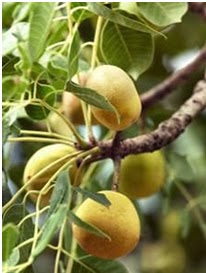
Facts about the Morula Tree-Namibia

The marula is a fairly attractive deciduous tree that grows to a medium-size of around 7-18m. It has a broad, mostly straight trunk and a widely spreading, fairly dense, rounded crown. Old stems are fairly smooth and the bark peels off sporadically in rather large, flat, roundish discs exposing underlying yellowy bark. This in turn colours the old stems grey with yellowish patches.Leaves on the marula are compound with 3-7 pairs of leaflets and a terminal one 30-100 x 15-40mm. On young plants the leaves have toothed margins. The small flowers are pinkish-red in colour, and male and female flowers occur on separate trees and bloom September-November. The fruits are large and fleshy, up to 40mm in diameter and ripen yellow in January-March.


 The marula is a very busy tree indeed. The leaves are browsed by game and the bark is stripped by elephants. The fruits are edible and exceptionally high in vitamin C content and are eaten by livestock, game, monkeys, baboons and humans. They are used to brew an alcoholic drink and they make a delicious jelly preserve. The tasty nut-like kernels are also eaten by humans. The bark is used in traditional medicine and butterflies and moths breed on the tree. The timber is used for carving and firewood and the bark can be used to make a dye. Marula grows in a woodland habitat and can be found in the far north of  Namibia.
Some Lodges where this tree may be found:
Ondangwa Hotel, Oshakati Country Lodge, Ruacana Eha Lodge.


For generations, women in the Oshana, Ohangwena, Omusati and Oshikoto regions of north-central Namibia have been using it as a source of food as well as for its cosmetic properties. Inside the fruit is a large nut, which reveals two to four locules. When broken open, each contains an oil-rich kernel. With a skill handed down from generation to generation, rural women are able to remove these small kernels and squeeze out the oil. This they then use either as an ingredient to complement the taste and texture of traditional chicken and mahango dishes, or as a moisturiser on their skin.


Thursday, September 19, 2013

The National Botanic Garden - Namibia

The National Botanic Garden of Namibia is a 12 hectare nature reserve in the heart of the City of Windhoek, where you can see and learn about Namibia's fascinating plants.

 
The garden initially began in the early 70s as a nature park when the area was fenced off, paths were laid out, a dam was built and some of the first trees were planted. When the funds became depleted and full-time staff members could no longer be employed, the garden was closed.
Thus it remained until the 1990s when a herbarium was opened on the premises.
The herbarium staff members asked the Ministry permission to develop the botanical garden. They were given the go-ahead, and when the herbarium subsequently became the National Botanical Research Institute (NBRI), they continued to administer the garden. 


 Golden and tawny during the dry winter months, the Botanical Gardens, unlike others in the world, hasn’t been landscaped, planted with lawns, or adorned with exotic plants – it remains purely and proudly Namibian.


Enjoy walks and birdwatching in an relaxing environment!!!!!


Plants, Trees and Flowers - Namibia

The Welwitschia Mirabilis -   As its name suggests one of the most amazing plants you will see. You can spot it in several areas in the Namib Naukluft Park, or as we did, in the Petrified Forest. An adult welwitschia consists of two leaves, a stem base and roots.  Its two permanent leaves are unique in the plant kingdom. They are the original leaves from when the plant was a seedling, and they just continue to grow and are never shed. They are leathery, broad, and lie on the ground becoming torn to ribbons and tattered with age. Their estimated lifespan is 400 to 1500 years.

Bottle Tree - These striking trees are distinguished by their thick bottle-shaped trunk, which is almost branchless until the top. The branches are few and covered with thorns up to a foot long. The flowers appear in the spring, when the tree is leafless, which is why they look so dramatic. The Bottle tree is an endemic species of Namibia, growing in semi-desert areas and dry bush, especially Damaraland.
 
The makalani palm -Breaks up an otherwise treeless landscape in the northern part of Namibia.
The makalani grows quite tall, up to 20 metres high. Aside from looking beautiful with a blue sky behind and when the sun hits their leaves, the makalani is used by locals. Their leaves are cut into threads and used to weave baskets that can be found for sale around Namibia. They are also the source of two alcohols. Palm wine is made from the terminal bud, but, as this kills the tree it is against the law. This law is apparently flouted however. Less devastating to the plant is the distillation of a local brand, ombike, which is made from fermenting the fruit of the makalani. The seeds are often carved and sold as decorations and are also used as fuel for fires in this country where wood is at a premium.