Showing posts with label North Namibia. Show all posts

Friday, July 28, 2017

The Recently Opened Cheetah View Lodge!

Opened June 2017

Featuring air conditioning, Cheetah View Lodge offers accommodation in Otjiwarongo. Frans Indonga Game Drive is 24 km away. Free WiFi is provided .

All units feature a seating area. There is a private bathroom with a shower in each unit. Towels and bed linen are featured.

Cheetah View Lodge also includes a terrace. Guests can enjoy a meal at the on-site restaurant.

Frans Indonga Hiking trail is 25 km from Cheetah View Lodge, while Roadside picnic spot (shaded) is 26 km from the property.


Friday, January 8, 2016

Elephants in Namibia

Namibia's Approximate elephant population of 100,000 are all Savannah elephants, the largest sub-species of elephant, easily distinguishable by their very large ears and longer front legs. they can be found in the north-eastern parts of Namibia and have the luxury of roaming freely among lush vegetation and riverine countryside, often crossing the border to Botswana in their search for food

 Elephants are known for their long lifespans (similar to humans), intelligence, memory and family structure. After a gestation period of 22 months, a baby elephant requires mother's milk for about two years. They enter puberty around 10 to 12 years of age, when females can become pregnant, are considered adults by age 18, and can live into their 60s.

The youngsters learn all they need to know from their family members: mothers, aunts, sisters and brothers. As males reach puberty, however, they soon leave their family herds and join other males to continue learning proper adult behavior from older and more dominant bulls. A younger one sometimes accompanies an older bull and is called an “askari”.

Females usually remain in their family herds, which are led by a “matriarch”. Matriarchs are usually the largest and oldest female, the one with the richest store of knowledge about water, food resources, escape routes and hiding places in their range area.


'They say an elephant never forgets. What they don't tell you is, you never forget an elephant'

Tuesday, September 24, 2013

Facts about the Morula Tree-Namibia

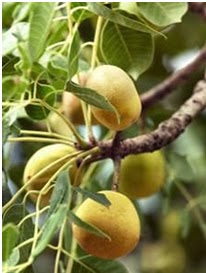
The marula is a fairly attractive deciduous tree that grows to a medium-size of around 7-18m. It has a broad, mostly straight trunk and a widely spreading, fairly dense, rounded crown. Old stems are fairly smooth and the bark peels off sporadically in rather large, flat, roundish discs exposing underlying yellowy bark. This in turn colours the old stems grey with yellowish patches.Leaves on the marula are compound with 3-7 pairs of leaflets and a terminal one 30-100 x 15-40mm. On young plants the leaves have toothed margins. The small flowers are pinkish-red in colour, and male and female flowers occur on separate trees and bloom September-November. The fruits are large and fleshy, up to 40mm in diameter and ripen yellow in January-March.


 The marula is a very busy tree indeed. The leaves are browsed by game and the bark is stripped by elephants. The fruits are edible and exceptionally high in vitamin C content and are eaten by livestock, game, monkeys, baboons and humans. They are used to brew an alcoholic drink and they make a delicious jelly preserve. The tasty nut-like kernels are also eaten by humans. The bark is used in traditional medicine and butterflies and moths breed on the tree. The timber is used for carving and firewood and the bark can be used to make a dye. Marula grows in a woodland habitat and can be found in the far north of  Namibia.
Some Lodges where this tree may be found:
Ondangwa Hotel, Oshakati Country Lodge, Ruacana Eha Lodge.


For generations, women in the Oshana, Ohangwena, Omusati and Oshikoto regions of north-central Namibia have been using it as a source of food as well as for its cosmetic properties. Inside the fruit is a large nut, which reveals two to four locules. When broken open, each contains an oil-rich kernel. With a skill handed down from generation to generation, rural women are able to remove these small kernels and squeeze out the oil. This they then use either as an ingredient to complement the taste and texture of traditional chicken and mahango dishes, or as a moisturiser on their skin.


Friday, December 2, 2011

Ministry of Agriculture, Water & Forestry: Foot & Mouth Desease Update in Caprivi

We received news that foot and mouth has become a problem again for the December season in the Caprivi area. Please see the information received from the Ministry of Agriculture, Water & Forestry:
 
MOVEMENT OF ANIMALS/PRODUCTS AND INFECTIOUS THINGS THROUGH VETERINARY ROAD BLOCKS, CAPRIVI.

1.    The following animals/infectious things may not under any circumstances be allowed to pass through the road blocks from any infected area:
·         All cloven hoofed animals (cattle, sheep, goats, pigs, and game.)
·         Raw red meat
·         Raw milk
·         Grass, hay, straw, reeds, Lucerne
·         Manure
·         Hides and skins and second hand jute bags
·         Bone, bone meal , carcass meal and blood meal
·         Large quantities of firewood i.e., vehicle load
·         Sour milk
·         Other products that might pose a risk – contact State Veterinarian.

2.    The following may cross the road block from an infected area:
·         Dogs and cats
·         Horses, donkeys and mules
·         Live or frozen poultry and birds, feathers, eggs and raw meat of poultry and birds
·         Fish, reptiles, frogs, worms
·         Vegetables, fruit, wild, free from manure or blood
·         Leafy vegetables such as cabbages, spinach, lettuce, celery, etc., if free from manure or blood.
·         Butter, margarine, cheese in original container/package
·         Sealed containers of pasteurized milk
·         Cooked meat/canned products/polony, Vienna’s in original/vacume packed container
·         Mealie – meal
·         Quarry stones for construction
·         Trophies (with taxidermy documents) wrapped in transparent material

 3   The following may cross the road block after spraying
     with 5% washing soda
·         Wood carvings, curios, mats, future manufactured from reads/grass
·         Small quantities of firewood less than 20kg
·         Horns

Dr. F. Joubert
Deputy Chief Veterinary Officer
Windhoek

Please do not hesitate to contact us for more details: info@namibiareservations.com

Friday, April 1, 2011

North Namibia in flood

For the third consecutive year, president Hifikepunye Pohamba of Namibia has declared a state of emergency due to heavy rain and subsequent flooding mostly in the northern part of the country. There has been heavy rainfall since January, causing water levels to rise in the Zambezi and Okavango rivers. Around 62 people are reported to have drowned and thousands more are displaced. The government has authorised N$30 million in relief funds to assist residents and for crops and infrastructure that have been destroyed. Local Namibian media are also reporting that a health crisis is looming as 22 clinics are flooded and surrounded by water. To make matter worse, more flooding is still expected from Angola over the next two weeks. The Namibia Tourism Board issued the following statement: “We have not received any formal notifications from any of the stakeholders yet. However, the situation as it looks, is rather serious in the northern part of the country. There are roads that have been totally swept away, however the roads that we are aware of to date,‘do not’ include many of the tourist routes. There are some establishments in the north as well that are reported to be totally inaccessible but again, those are not among the ones that you find in our packages etc. “Overall, our historical and normal routes remain safe to travellers.” Following concerns about rising waters in far northern Namibia and north-eastern Namibia, the individual lodge statuses are as follows:

• Hakusembe River Lodge has reopened with two rooms and the floating chalet but water levels may rise at short notice. Please call to check in advance.

• Impalila Island Lodge - the lodge is operating as normal. The airstrip is closed, and guests are being transferred by boat from Kasane.

• Lianshulu Lodge - the lodge is operating as normal.

• Namushasha Country Lodge - the lodge is operating as normal. Follow the clearly marked detour signs.

• Ndhovu Safari Lodge - the lodge is operating as normal but due to swamping of the access road, guests will be transported from the parking lot to the lodge by boat. The campsite is closed.

• Ntwala Island Lodge - the lodge is operating as normal. The airstrip is closed, and guests are being transferred by boat from Kasane.

• Susuwe Island Lodge - the lodge is operating as normal. 4x4 off-road travel and activities that require 4x4 vehicles may be cancelled, depending on conditions. Guests should be advised to keep to the main highway and other well-travelled routes. Road conditions should be established on departure by asking at reception or by calling the destination ahead.


Please contact us for more details or if you would like to book an establishment:

Wednesday, February 2, 2011

Impalila refurbishments and Islands in Africa news

The aftermath of the 2010 football World Cup is almost a distant memory yet Islands in Africa is anticipating an exciting year ahead. Already guest enquiries for the Caprivi lodges has sparked renewed interest in the region as world economies find their footing after previous turbulence.

In anticipation of the coming season, renovation is currently underway. Ntwala Island Lodge is undergoing general maintenance, while Impalila Island Lodge is enjoying a facelift with both structural and major soft refurbishment taking place - these improvements include the main lodge facilities as well as the chalets. As a consequence of the work being completed, under supervision of new management, Impalila Island Lodge is at present closed but will reopen in time for Valentine's Day on the 14th February 2011.

Though the Zambezi has begun to rise - as it is wont to do at this time of the year - the quality of the tiger fishing indicates the existing health of the river. In late January, productive angling was enjoyed at the lodges with a trio of specimen "water dogs" exceeding the 8 kg mark being landed.

At Susuwe Island Lodge on the Kwando River, feverish excitement prevailed when guests sighted lion cubs in the company of their parents near Little Serengeti. From the "vocalising" taking place from the males, it seems they are still intent on remaining active within their territory despite the inclement weather patterns. Encouragingly too, leopard sightings are becoming more frequent.


For more details or bookings contact us at: info@namibiareservations.com

Tuesday, January 25, 2011

Flooding of the Okavango River and Mariental area

  • Please be advised that the road from Mariental to the Intu Afrika Private Game Reserve is flooded.
    If you plan to travel in that direction without a 4x4 vehicle, please rather drive via Kalkrand.

And on another note:

  • The Okavango River has started to rise at an alarming speed. It has already reached much higher levels now than it had the same time last year. The first floodings have been reported along the river and we expect more floods to occur in the coming weeks. Divava Okavango Lodge & Spa is in the fortunate position to be located on higher grounds and they do not experience flooding of the lodge or the access roads. Please continue to travel to the Okavango. The area needs your support and even during the floods the Kavango and Caprivi remain an unbelievable natural spectacle.

Do not hesitate to contact us for more details at info@namibiareservations.com or visit the website at www.namibiareservations.com/suclaboe.html

Thursday, November 18, 2010

Ombalantu Baobab recommended as National Heritage Site

The famous Ombalatu Baobab is Outapi has been recommended for proclamation as a national heritage place by the National Heritage Council of Namibia.

The landmark Baobab tree, locally known as Omukwa wa Nakafingo na Temba, is estimated to be between 700 and 800 years old and has a height of about 20 m. The branches of the ancient tree provided an ideal vantage point and served as a lookout post in days gone by.

The cavernous trunk served as a sanctuary to the Aambalantu people fleeing attackers and was also used as a storage place. It was put to use of a post office in 1940 and later became the centrepiece of a base of the South African military. A stone pulpit and benches are reminders of its use as a chapel during this period. An opening of about 1 m high by 2 m wide provides access to the hollow trunk which can accommodate about 20 people.

The large Baobab is the focal point of the Ombalantu Baobab Tree Heritage Centre in Outapi.
Submissions and requests for hearings by members of the public on the recommended proclamation of the Ombalantu Baobab must be submitted to the National Heritage Council of Namibia before Monday, 29 November.
Other well-known baobabs in North-Central Namibia include King Nashilongo’s Baobab which served as the king’s office in Tsandi. Sir Howard’s Baobab, also in Tsandi, was named after the first Administrator of South West Africa, Sir Howard Gorges, who visited the area in June 1916.

Also recommended for proclamation as a national heritage place is the Okahao Baobab - an infamous tree during the years of the liberation struggle.
The Ombalantu Baobab is not the first baobab in the country to be declared a national monument. That honour goes to the baobab on the farm Keibib, north of Grootfontein. At the time of its proclamation in 1951, it was the largest known Baobab in Namibia’s commercial farming area.

Derived from TourNamibia

Wednesday, July 7, 2010

Updated information & pictures of Omarunga Lodge


The pictures and information for the Omarunga Lodge near the Epupa Falls have been updated as well as new pictures have been added.

They now offer 14 en-suite Chalets of which one is a Family Chalet and one can be used as a Honeymoon Chalet as well as three that can be comvertet into a Triple. 9 campsites with shared ablution blocks offer hot and cold water.
Further features includes a Bar and Lapa at the River edge as well as another Bar, Lapa, barbecue area and Pool on a hill overlooking the River offering spectacular views.
Visit our website for more details: