
Namibia is an arid, rough land full of contrasts, but still inviting and easy to travel. As one of the most scarcely populated countries in the world, it’s not the right place to get lost in the crows. But it is a top destination for those who enjoy nature, grandiose landscapes, spectacular sand dunes and first-class wildlife viewing.
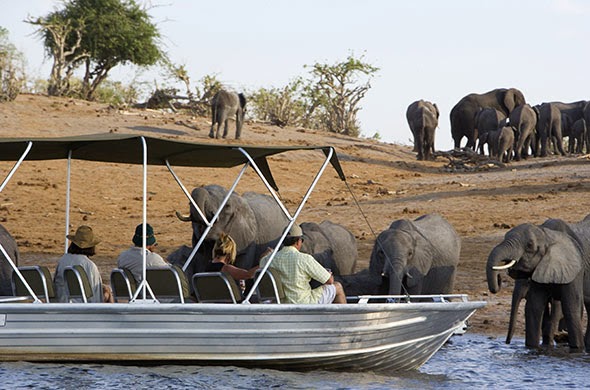
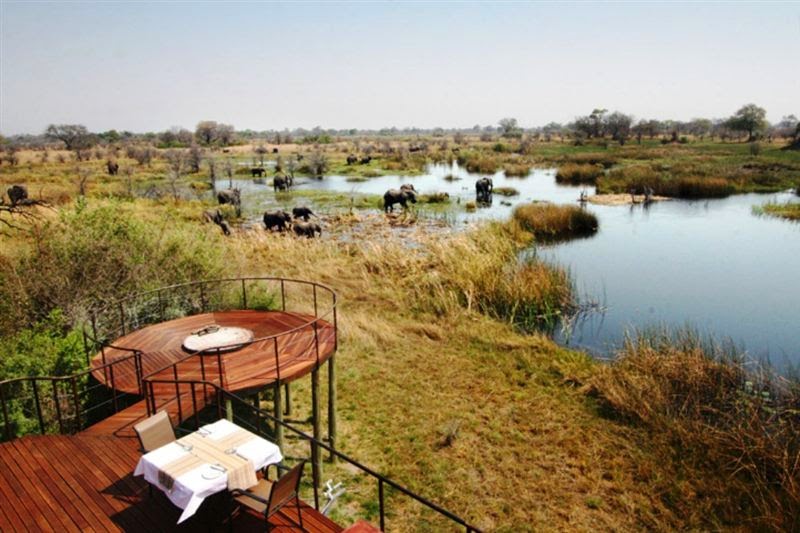
The Caprivi Strip is a narrow strip of land between Botswana on the south, Angola and Zambia to the north, and Namibia’s Okavango Region to the west. The Caprivi is the wettest region in Namibia with its high rainfall and a number of major rivers like the Okavango, Kwando and Zambezi. The abundance of water sustains a large variety of animals, including a large population of elephants. The wildlife is being protected in four reserves. There are no fences however, so the animals can roam freely across the borders of the neighboring countries.
National parks & reserves in the Caprivi Strip
Popa Falls Reserve
Popa Falls lie at a point where the Okavango River breaks up and drops 2.5m over a rocky section, caused by the first of five geological faults.The area by the riverside at Popa Falls is thickly vegetated with tall riverine trees and lush green shrubs, which encourage waterbirds and a variety of small reptiles. Footbridges have been built between some of the islands, and it's worth an hour's stop to spend hopping among the rushing channels, or walking upstream a little where there's a good view of the river before it plunges over the rapids.
Popa Falls lie at a point where the Okavango River breaks up and drops 2.5m over a rocky section, caused by the first of five geological faults.The area by the riverside at Popa Falls is thickly vegetated with tall riverine trees and lush green shrubs, which encourage waterbirds and a variety of small reptiles. Footbridges have been built between some of the islands, and it's worth an hour's stop to spend hopping among the rushing channels, or walking upstream a little where there's a good view of the river before it plunges over the rapids.

Mahango National Park
The eastern boundary of Mahango National Park is the Okavango River, which is also the reserve's focus.On the higher and drier land of the bank, are wide belts of wild date palm-forest, as well as the lush riverine vegetation that you'd expect. Further from the river are dry woodlands and acacia thickets, dotted with a few large baobabs.

Mamili National Park
This unfenced swampland reserve of about 350km² was created shortly before Namibia's independence and consists largely of marshland, veined by a network of reed-lined channels. It includes two large islands: Nkasa and Lupala. Mamili is located in the southwest corner of the eastern Caprivi Strip, where the Kwando sharply changes direction to become the Linyanti.
For more information please contact us at:


