If you are driving in the
Keetmanshoop district of Namibia you
will see Quiver trees on many of the hillsides
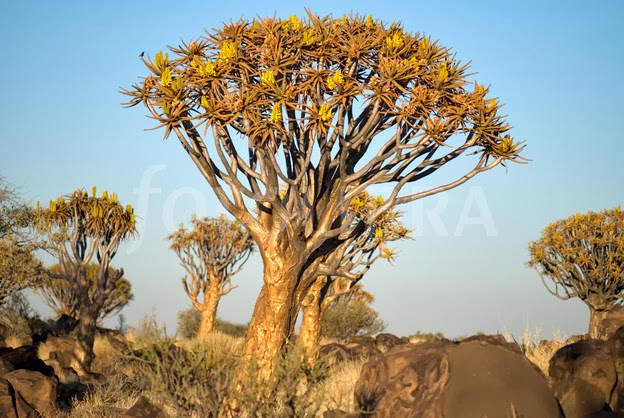
, but a short detour to the Quivertree Forest that is situated on the farm Garigunas will make some exellent photographs of 'a tree with a difference'.
The Quivertree is only Naturaly found in Northen Cape and Southern Namibia running up into damaraland.
The Quivertree is not really a tree but a plant being the aloe dichotoma. The trees normally seen standing singly in very arid rocky areas and they area ussually found on rocky north- facing hills.It is quit unusual to see them grouped (forest like) like on farm Garigunas 157.
These amazing trees can live for between 200 - 300 years old, each about 9 metres in height, and have a base diametre of about 1 metre. The Quiver tree trunk is tapered and covered with a rich brown yellow patterned bark that flakes of giving a scaley effect to the trunk.The core of the trunk is mainly fibres which allows for water storage.Older trees bristle with a profusion of branches that are silver in appearance. The branches exudes fine droplets of liquid that when dried leaves behind a silver taclum like powder that helps to reflect the sharp light.


No comments:
Post a Comment